


Crazy Joker
4.6131.00 Reviews
App Specs
- Version
- 1.0.1
- Updated On
- License
- Free
- Downloads
- 10,000+
- Developer
- Lingkar Nusantara Pers
- Categories
- Casual
- Platform
- Android
Screenshots


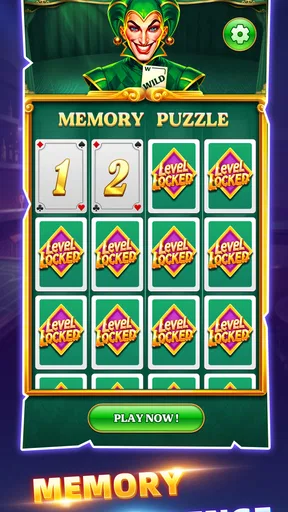
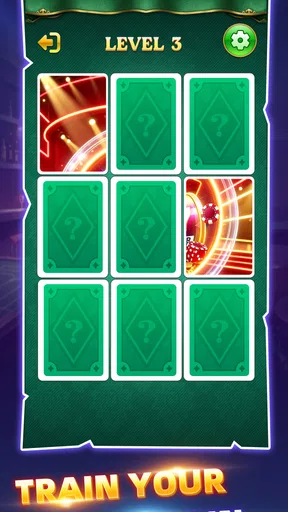
 Analysis by AppCompare
Crazy Joker is a casual memory puzzle game from Lingkar Nusantara Pers that aims to turn short bursts of concentration into a simple, approachable play session. I found its appeal easy to understand: it is the kind of game you can open when you have a few quiet minutes, focus on a visual challenge, and put away without needing to learn a complicated system first. Its store summary describes it as a fun memory puzzle game, while the short description keeps things even simpler with the name “Crazy Joker.”
That simplicity is both the main attraction and the main question. A memory game does not need a huge feature set to be enjoyable, but it does need to make each round feel clear, fair, and worth repeating. In my experience, Crazy Joker works best when I treat it as a quick mental reset rather than a long-form game. It has the right casual identity for that role, although players looking for deep progression, a story, or a large competitive system may find its scope too narrow.
How the game feels in everyday use
The most natural way to approach Crazy Joker is as a small concentration exercise. I would use it while waiting for an appointment, during a short break, or at the end of the day when I wanted something interactive but not demanding. The memory-puzzle format gives the session a clear purpose: pay attention, remember what you saw, and make the next choice carefully. That is more satisfying than endlessly scrolling, yet lighter than committing to a traditional action or strategy game.
Because it belongs to the casual category, the game is easier to recommend to people who do not normally play games. You do not need to understand a fictional world, manage a character, or study a long tutorial before getting started. That lowers the barrier for a family member or friend who wants a simple game on a phone but does not want a complex interface.
The Joker theme also gives the otherwise familiar memory concept a recognizable identity. That matters because memory puzzles can quickly blur together when they rely only on identical cards and generic presentation. Here, the title gives the experience a playful character, even though the core attraction remains the mental challenge rather than a narrative.
I would not describe it as a game designed for marathon sessions. Its strength is the compact loop: open it, concentrate, play, and stop. If you enjoy games that reward patience and observation, that loop can be pleasantly repeatable. If you need constant novelty, dramatic progression, or a strong sense of achievement after every session, the same loop may begin to feel limited.
What you are actually getting for free
Crazy Joker is free to download, so the initial decision is straightforward: you can try the game without paying an entry price. That makes experimentation easy. I can install it, see whether the memory challenge suits me, and decide from actual use rather than committing money before understanding the experience.
Worth Reading Before You Choose

Flipboard Shows What News Apps Must Do Beyond the Feed

Switching to Android Auto Means Rethinking Your Driving Routine

Google Calendar Makes a Crowded Week Easier to Manage

Ludo King Makes the Most of the Minutes Between Plans

Baby Panda World Brings Quick Play to Modern Phones, but Its Game Library Feels Busy

ESPN’s Live Game View Makes Following Close Games Easier
Free access is especially useful for this type of game because the value depends heavily on personal tolerance for repetition. One player may enjoy returning to a familiar mental exercise, while another may lose interest quickly. A free starting point gives both people a fair chance to find out where they stand.
The game is listed for Everyone, which supports its role as an accessible casual title. I would still consider the individual player’s attention span and comfort with visual concentration, but there is no need to approach it as a niche game aimed only at experienced players. It is better understood as a broadly approachable pastime.
There is also a practical benefit to the current version, 1.0.1. That version label tells me I am looking at an early release rather than a mature game with a long history of visible development. I would keep expectations realistic: the core experience may be the main reason to install it, while long-term variety and refinement are areas I would judge through continued use rather than assume in advance.
The game has reached over ten thousand installs and holds a 4.6 average from 151 ratings, with 130 written reviews. Those figures suggest that the title has attracted a starting audience and that the overall response has been positive. I would treat that as encouraging rather than conclusive, because a memory game still needs to fit the individual player’s taste. A high average cannot turn a repetitive format into something every person will enjoy.
Where the value comes from
The strongest value is convenience. Crazy Joker gives me a focused activity that requires more attention than a passive video but less preparation than a board game or a full puzzle adventure. That middle ground is useful when I want to exercise my memory without setting aside a long block of time.
A second source of value is its low learning cost. Many mobile games try to keep players engaged through layers of currencies, upgrades, missions, and unlocks. Those systems can be enjoyable, but they also create work around the game. A memory puzzle can be more refreshing precisely because the task is direct. I can concentrate on the challenge instead of maintaining a virtual inventory or following a long chain of objectives.
There is a subtle advantage in using it as a deliberate pause between tasks. For example, after finishing a work call, I might play a short session before returning to a difficult task. The game gives my attention a clear change of direction. That does not make it a productivity tool, and I would not claim that playing it automatically improves memory in a measurable way. Its practical benefit is simpler: it offers a structured, screen-based break that asks me to focus on one thing.
It can also work as a shared, low-pressure challenge. Two people can take turns and compare who remembers more accurately, without needing to explain complicated rules. That makes it more suitable for casual social use than many single-player games, although the enjoyment will depend on how the particular session handles challenge and repetition.
The tradeoffs behind the simple design
The same simplicity that makes Crazy Joker welcoming can make it feel thin for experienced mobile players. If you usually play games with rich progression, multiple modes, character development, or a story that unfolds over time, this is probably not the right substitute. Its identity rests on the memory-puzzle activity itself, so there is less room for the kind of variety found in larger casual releases.
Repetition is the most important tradeoff to consider. Memory games naturally reuse a basic mental action: observe, retain, and recall. That can be calming and satisfying, but it can also become predictable. I would recommend short sessions rather than forcing myself to keep playing after the challenge stops feeling fresh. The game is more likely to retain its appeal when used as a compact activity instead of a title that must fill an entire evening.
Another consideration is the difference between accessibility and depth. A straightforward game is easier to pick up, but it may not provide enough room for players who want to master advanced techniques or build a long-term routine. Before choosing it as a main game, I would ask myself whether I enjoy repeating a focused mental task for its own sake. If the answer is no, a wider casual puzzle game may offer better value of time even when it is also free.
The early version status creates a further practical tradeoff. Version 1.0.1 suggests a relatively young product, so I would approach it with curiosity but not expect the breadth of a long-established puzzle series. That is not a criticism of the developer, Lingkar Nusantara Pers; it is simply a reminder that a new game and a mature alternative serve different expectations. Players who enjoy watching a simple concept develop may find that appealing, while players who want a fully expanded package may prefer to wait or choose something more established.
I also would not install it expecting a substitute for cognitive training programs. A casual memory game can be enjoyable and mentally engaging, but entertainment value is not the same as a formal assessment or a structured learning course. That distinction matters if the reason for downloading is educational rather than recreational.
Who is most likely to enjoy it
Crazy Joker is a good match for someone who wants a free casual game with an immediately understandable premise. It suits players who enjoy visual recall, prefer short sessions, and do not need a story to justify opening a game. It is also a sensible choice for a first mobile game because the memory-puzzle format is less intimidating than games built around fast reactions or complicated controls.
I can see it working particularly well for people who keep several small activities on their phone and want one that encourages concentration. A short round can serve as a transition between errands, a waiting-room distraction, or a quiet alternative to social media. The key is to use it on its own terms: a focused pastime, not an endless content platform.
It may also appeal to parents looking for an Everyone-rated game that is easy to explain. I would still play alongside a child at first, not because the concept is difficult, but because shared play helps reveal whether the pace and visual presentation are comfortable for that particular child. The age label is useful guidance, not a guarantee that every player will have the same experience.
On the other hand, I would skip it if my priority were a large amount of content, a competitive ranking scene, a narrative campaign, or a game that constantly introduces new mechanics. I would also skip it if I dislike memory challenges themselves. No amount of positive feedback can change that basic fit issue. A free game is only good value when its central activity is something I actually want to repeat.
How it compares with familiar casual alternatives
Compared with a match-three game, Crazy Joker asks for a different kind of attention. Match-three titles often reward quick pattern recognition and chain reactions, while a memory puzzle rewards holding information in mind and recalling it accurately. I would choose Crazy Joker when I want a calmer, more deliberate challenge; I would choose match-three play when I want faster visual movement and more immediate feedback.
Compared with word puzzles, the game is less dependent on vocabulary. That makes it a better option for a mixed group of players who may not share the same language confidence. Word games can offer greater variety through clues and meanings, but they can also become frustrating when the difficulty depends on language knowledge rather than memory.
Compared with a brain-training app, Crazy Joker appears easier to approach as entertainment. A dedicated training app may be preferable for someone looking for schedules, multiple exercise types, or progress tracking. I would choose this game when I want one clear activity without turning the experience into a personal improvement project.
Compared with a larger casual game, its advantage is focus. There is less to manage and fewer distractions from the central puzzle. The disadvantage is equally clear: a broader game may keep me interested for longer because it offers more varied objectives. The better choice depends on whether I value a clean, repeatable loop or a larger package of content.
Practical ways I would use it
My first tip is to play in short, intentional sessions. If I open Crazy Joker while distracted by messages, music, and several other tasks, I am not really testing the memory challenge fairly. Putting the phone down for a focused interval makes the game more enjoyable and gives the result more meaning.
My second tip is to use it as a warm-up rather than a reward that must last. Before reading, studying, or doing another attention-heavy activity, a quick memory puzzle can help me shift away from scattered browsing. I would not treat that as a proven training method, but it is a practical routine if the game helps me settle into concentration.
My third tip is to avoid judging the whole game from one unusually easy or difficult session. Memory performance changes with tiredness, interruptions, and mood. If a round feels frustrating, I would stop and return later instead of assuming the game is unfair. Conversely, an easy session should not be taken as evidence that the game will always remain challenging.
A fourth useful approach is to share the game selectively. It can be fun to challenge a friend, but comparing results only works when both people accept that the goal is enjoyment rather than proving who has the better memory. For a child or an older relative, taking turns can also make the activity feel more social and less like a test.
My recommendation after weighing the value
I recommend Crazy Joker to readers who want a free, casual memory puzzle and are comfortable with a focused loop that may become repetitive over time. The positive rating, growing install base, and Everyone classification make it an inviting title to try, while the early version and narrow concept are reasons to keep expectations measured. I see it as a convenient small game, not as a complete replacement for a large puzzle collection.
The decision is especially easy for someone who wants to avoid spending money on an untested game. Since access is free, the sensible approach is to try a few focused sessions and judge whether the memory challenge remains enjoyable. If it becomes a pleasant part of a daily break, it delivers useful entertainment without an upfront cost. Its value comes from fitting neatly into spare minutes, not from promising an enormous amount of content.
I would choose another casual title instead if I needed a story, extensive progression, or a constantly changing set of mechanics. I would also look elsewhere for formal cognitive exercises or a more competitive experience. Those are not flaws in Crazy Joker so much as clear boundaries around what it is trying to be.
For me, the final verdict is positive but specific: Crazy Joker is worth trying when a simple memory challenge sounds appealing, especially for short breaks and relaxed play. It is not the game I would install for depth or variety, but it is a reasonable free option for anyone who enjoys testing attention, remembering visual details, and returning to a familiar casual routine.
As a compact release from Lingkar Nusantara Pers, it succeeds when I let it remain compact. I would recommend giving it a fair trial, keeping sessions focused, and deciding based on whether the central memory loop feels satisfying rather than expecting features that belong to a different kind of game.
Pros
- Simple controls make it easy to start playing immediately.
- Quick rounds are suitable for short gaming sessions.
- Bright visuals give the game a lively casino atmosphere.
- Runs well on most modern Android and iOS devices.
- The familiar joker theme is appealing to casual card-game fans.
Cons
- Gameplay may feel repetitive after extended sessions.
- Progress can depend heavily on luck rather than strategy.
- Frequent effects may become distracting during longer play.
- Some features may require in-app purchases to access fully.
- The casino-style presentation may not appeal to every player.
FAQs for Crazy Joker
What is Crazy Joker, and how does the game work?
Crazy Joker is a casual casino-style game built around joker and card-themed entertainment. Players typically spin, match, or interact with symbols to complete rounds and pursue higher scores or in-game rewards. The interface is designed to be easy to understand, so new users can usually begin quickly. Before downloading, check the exact version available in your region because features and game modes may differ.
Is Crazy Joker free to download and play?
Crazy Joker can generally be downloaded without an upfront purchase, but the availability of optional in-app purchases depends on the version and platform. Some features, virtual items, extra turns, or progression benefits may require payment. It is a good idea to review the store listing carefully and enable purchase restrictions, especially if children or other users can access your device.
Does Crazy Joker involve real-money gambling or cash prizes?
The name and casino-inspired presentation may make Crazy Joker look like a real-money gambling application, but users should verify this before playing. Many similar games use virtual coins only and do not allow withdrawals, while others may include gambling-related services subject to local laws. Read the official description, payment terms, age rating, and privacy information before making deposits or sharing financial details.
Can Crazy Joker be played offline, and what device permissions does it require?
Offline availability depends on the specific Crazy Joker release. Basic gameplay may work without a constant connection, but advertisements, account synchronization, updates, leaderboards, or purchases can require internet access. During installation, review the permissions requested by the app and consider whether they are reasonable for a game. Avoid unofficial downloads, since altered versions can request unnecessary or risky access.
Is Crazy Joker suitable for children and safe to install?
Crazy Joker’s suitability for children depends on its age rating, advertising, purchase options, and whether it contains gambling-style mechanics. Even when no real money is involved, repeated spins, rewards, or chance-based systems may not be appropriate for younger players. Parents should check the store rating, privacy policy, developer information, and parental-control settings before allowing installation or enabling purchases.


